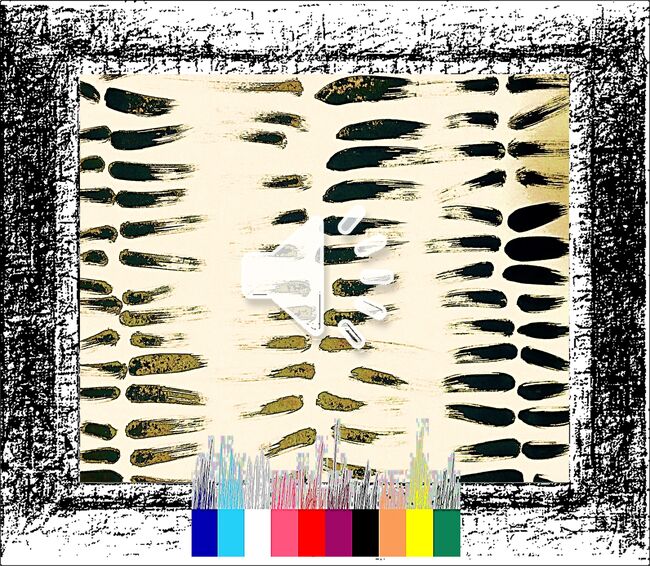
 Kang Gyeongho, Untitled-14, ADFA, 2026
AI 시대의 ADFA(Analog-Digital Fusion Art)
[문화칼럼] 픽셀의 바다 위, 아날로그의 닻을 내리다
- 강경호 | ADFA 아티스트 | 2026년 6월 8일
오늘날 뉴미디어 아트는 눈부신 성취를 이룩해 냈다. 레픽 아나돌(Refik Anadol)의 거대한 데이터 회화는 인공지능이 연산한 수백만 개의 픽셀을 통해 인간의 지각 지평을 확장하는 미학적 경이로움을 선사하며, 펠리페 판토네(Felipe Pantone)는 디지털 에러를 캔버스 위에 정교한 기계적 질서로 번역해 낸다. 이들은 첨단 기술을 매개로 인류가 마주한 새로운 디지털 영토를 증명해 내는 독보적인 시각적 성취를 보여준다.
다만, 이토록 압도적인 기술적 숭고미 앞에서 우리는 역설적으로 마음 한구석의 근원적인 질문을 마주하게 된다. 데이터의 무한한 확장과 완벽한 계산이 정점에 달할수록, 기계가 대체할 수 없는 인간 고유의 불완전한 온기와 사유의 공간은 어디에 위치해야 하는가에 대한 미학적 갈증이다. 이는 앞선 성취에 대한 폄하가 아니라, 기술 문명이 고도화될수록 인간성이 지닌 고유한 궤적을 찾고자 하는 예술 본연의 존재론적 탐색이다.
이러한 맥락에서 양민하, 팀랩(teamLab), 차오페이(Cao Fei) 같은 아시아 작가들의 작업은 서구의 기술 중심적 성취와 대립하는 것이 아니라, 이를 심화하는 미학적 상호 보완의 가능성을 보여준다. 이들은 고도화된 기술적 문법을 과시하기보다, 정교한 픽셀의 연산을 가장 단순하고 절제된 아날로그적 물성 속으로 은닉한다.
양민하는 복잡한 컴퓨터 연산을 동양적 여백과 명상적 빛으로 환원하고, 팀랩은 가상 공간에 인간의 신체적 터치와 온기를 더해 대자연의 호흡을 복원하며, 차오페이는 차가운 디지털 매체 내부에 인간의 고독과 눈물이라는 원초적 서사를 부여한다. 이들이 도달한 지점은 결국 기술이 고도화될수록 예술의 종착지에는 언제나 인간적 흔적과 사유가 살아 숨 쉬어야 한다는 당위로 귀결된다.
이러한 미학적 갈증과 실천적 대안의 교차점에서 탄생한 담론이 바로 ADFA(Analog-Digital Fusion Art, 아날로그-디지털 융합 예술)이다. ADFA는 인공지능과 디지털 매체를 인간 예술가의 손길보다 우위에 두거나, 반대로 이를 단순한 하위 도구로 격하하는 이분법적 태도를 거부한다. 대신 기술적 질서(Digital)와 인간 고유의 무의식적 감수성(Analog)이 동등한 층위에서 융합되는 독자적인 회화적 패러다임을 지향한다.
인공지능이 단 몇 초 만에 완성도 높은 시각 이미지를 무한히 복제해 내는 시대에, 예술가의 생존을 지키는 것은 기술의 맹목적 수용도 감정적인 거부도 아니다. 기계의 인공적 연산을 포용하되, 그것이 반드시 인간 아티스트의 신체적 노동, 역사적 데이터, 그리고 정신적 사유라는 ‘아날로그적 필터’를 거쳐 물리적 공간에 안착하도록 실천하는 것이 ADFA(Analog-Digital Fusion Art, 아날로그-디지털 융합 예술)의 핵심 철학이다.
실천적 관점에서 ADFA(Analog-Digital Fusion Art, 아날로그-디지털 융합 예술)는 디지털의 무한성과 아날로그의 유한성이 결합하는 지점에서 구체화된다. AI가 제안한 수만 가지 가상 시나리오 중 단 하나의 영감을 선별하는 행위, 디지털 캔버스 위에 의도적으로 인간 손길의 불완전한 마찰력을 부여하는 행위, 그리고 최종 결과물을 스크린 너머의 물질적 회화나 입체적 질감으로 구현해 내는 물질화 과정이 바로 그것이다.
이 새로운 미학적 틀을 확산하고 체계화하려는 목적 역시, 동시대 창작자들이 기계의 연산에 종속되지 않고 스스로 주체성을 회복하도록 돕는 데 있다. 기술과 인간이 상호 주체로서 대등하게 호흡할 때, 예술은 기계의 노예로 전락하지 않고 도리어 인간성의 영토를 확장한다. 픽셀의 바다 위에서 아날로그의 닻을 내리는 이 여정은 포스트디지털 시대에 인간 정신의 고귀함을 수호하고 예술의 본질적 가치를 영원히 지속케 할 가장 아름다운 선언이 될 것이다.
#ADFA #아날로그디지털융합예술 #미디어아트 #강경호 #AI예술
강경호 (Gyeongho Kang) | 아티스트 · ADFA 디렉터
오늘날 전 세계의 모든 창작자가 이미 아날로그와 디지털을 결합한 예술을 펼치고 있다는 동시대적 통찰을 바탕으로, 이를 미학적으로 정립하고 일깨우는 ADFA(Analog-Digital Fusion Art) 선언자이자 예술가이다. 기술과 인간의 대등한 호흡을 주창하며, 모든 동시대 예술가들이 기계의 주권을 넘어 스스로의 주체성을 자각하도록 이 새로운 미학적 패러다임을 널리 알리고 증명해 나가는 데 목적을 두고 있다.
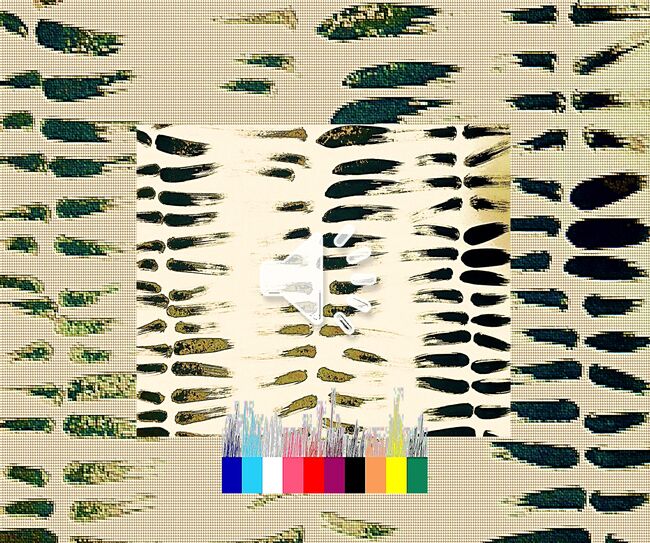 Kang Gyeongho, Untitled-14-1, ADFA, 2026
ADFA (Analog-Digital Fusion Art) in the Age of AI
[Cultural Column] Dropping the Analog Anchor Upon a Sea of Pixels
- Gyeongho Kang | ADFA Artist | June 8, 2026
Today, new media art achieves dazzling milestones. The monumental data paintings of Refik Anadol overwhelm viewers with millions of pixels computed by artificial intelligence, while Felipe Pantone translates digital errors into precise mechanical order upon the canvas. Through cutting-edge technology, these creators accomplish singular visual feats that expand the horizons of human perception.
Yet, in the presence of such overwhelming technological sublimity, we paradoxically confront a fundamental, haunting question. As the infinite expansion and flawless calculations of data reach their zenith, a profound aesthetic thirst arises: where should we locate the imperfect warmth and contemplative spaces inherent solely to humanity? This inquiry is not a dismissal of preceding triumphs, but rather an existential exploration native to art itself—a quest to trace the distinct marks of the human spirit as technological civilization advances.
In this context, the works of Asian artists such as Minha Yang, teamLab, and Cao Fei do not oppose Western tech-centric achievements; instead, they offer a profound aesthetic complement that deepens the discourse. Rather than parading advanced technological syntax, these creators conceal sophisticated pixel computations within the simplest, most restrained analog materialities.
Minha Yang reduces complex computer processing into Eastern negative spaces and meditative light, teamLab restores the rhythm of nature by embedding human touch and physical warmth into virtual realms, and Cao Fei infuses cold digital mediums with primal narratives of human isolation and tears. The destination these artists reach converges on an absolute imperative: no matter how advanced technology becomes, human traces and critical reflection must always remain alive at the core of art.
The discourse born at the intersection of this aesthetic longing and practical alternative is ADFA (Analog-Digital Fusion Art). ADFA rejects the binary opposition that either elevates artificial intelligence and digital mediums above the artist's hand or degrades them to mere subordinate tools. Instead, it pioneers a unique painterly paradigm where technological order (Digital) and innate, subconscious human sensibility (Analog) fuse on an egalitarian plane.
In an era when artificial intelligence replicates high-fidelity visual images endlessly in mere seconds, an artist's survival relies neither on blind acceptance nor emotional rejection of technology. The core philosophy of ADFA lies in embracing machine computation while actively ensuring it passes through an 'analog filter'—the artist’s physical labor, historical data, and spiritual contemplation—before cementing itself into physical space.
From a practical standpoint, ADFA materializes precisely where the infinity of the digital merges with the finiteness of the analog. This process unfolds when an artist selects a single spark of inspiration from tens of thousands of virtual scenarios proposed by AI, when they intentionally introduce the flawed friction of the human touch to a digital canvas, and when they materialize the final output beyond the screen into physical paintings or tactile textures.
The ultimate purpose of disseminating and systematizing this new aesthetic framework is to assist contemporary creators in reclaiming their sovereignty, ensuring they are never subordinated to machine calculation. When technology and humanity breathe together as co-subjects, art avoids subjugation to the machine and instead infinitely expands the territories of human nature. Dropping the analog anchor upon a sea of pixels will stand as the most beautiful manifesto of the post-digital era, safeguarding the nobility of the human spirit and eternally sustaining the intrinsic value of art.
#AnalogDigitalFusionArt #MediaArt #GyeonghoKang #AIart #PostDigital
Gyeongho Kang | Artist · ADFA Director
Gyeongho Kang is an ADFA (Analog-Digital Fusion Art) manifesto writer and artist who conceptualizes and illuminates this discourse based on the contemporary insight that all creators worldwide are already engaging in art that blends the analog and the digital. Advocating for an egalitarian rhythm between technology and humanity, he dedicates his practice to widely disseminating and proving this new aesthetic paradigm, empowering all contemporary artists to awaken to their own subjectivity beyond machine sovereignty.


 강경호 기자
  http://newsbusan.com/news/view.php?idx=16691

 김석준 부산교육감, 전국 첫 4선 성공… AI 미래교육 본격화
 부산, 8년 만에 민주당 시장…전재수 7월 1일 취임
 부산 기초단체장, 국힘 9·민주 7…균형 구도 재편
 AI 시대의 ADFA(Analog-Digital Fusion Art)
[문화칼럼] 픽셀의 바다 위, 아날로그의 닻을 내리다- 강경호 | ADFA 아티스트 | 2026년 6월 8일오늘날 뉴미디어 아트는 눈부신 성취를 이룩해 냈다. 레픽 아나돌(Refik Anadol)의 거대한 데이터 회화는 인공지능이 연산한 수백만 개의 픽셀을 통해 인간의 지각 지평을 확장하는 미학적 경이로움을 선사하며, 펠리.
AI 시대의 ADFA(Analog-Digital Fusion Art)
AI 시대의 ADFA(Analog-Digital Fusion Art)[문화칼럼] 픽셀의 바다 위, 아날로그의 닻을 내리다- 강경호 | ADFA 아티스트 | 2026년 6월 8일오늘날 뉴미디어 아트는 눈부신 성취를 이룩해 냈다. 레픽 아나돌(Refik Anadol)의 거대한 데이터 회화는 인공지능이 연산한 수백만 개의 픽셀을 통해 인간의 지각 지평을 확장하는 미학적 경이로움을 선사하며, 펠리.
 [초대석] 영랑호의 월요일 아침 풍경
초대석 = 월요일이 문을 열었습니다. 주말의 설렘은 조금 가라앉고 차가운 현실이 눈앞에 놓이지만 그래도 괜찮습니다. 설렘이 사라진 것이 아니라, 이제는 단단한 의지가 된 것이기 때문입니다. 월요일은 조금 더 묵직하게 다가옵니다. 해야 할 일도, 책임도, 생각도 늘어나기 마련입니다. 하지만 그 무게는 당신을 주저앉히는 것이 아니라 .
[초대석] 영랑호의 월요일 아침 풍경
초대석 = 월요일이 문을 열었습니다. 주말의 설렘은 조금 가라앉고 차가운 현실이 눈앞에 놓이지만 그래도 괜찮습니다. 설렘이 사라진 것이 아니라, 이제는 단단한 의지가 된 것이기 때문입니다. 월요일은 조금 더 묵직하게 다가옵니다. 해야 할 일도, 책임도, 생각도 늘어나기 마련입니다. 하지만 그 무게는 당신을 주저앉히는 것이 아니라 .
 [문화칼럼] ADFA 시대의 창작과 성찰
- 강경호, ADFA 아티스트|2026년 5월 30일 | AI 시대에 창작의 주체와 권리 문제는 기술 담론을 넘어 예술의 본질을 다시 묻는 계기로 다가왔다. 우리는 이제 “창작이란 무엇이며 그 중심은 어디에 있는가”라는 근본적 질문 앞에 서 있다. ADFA(Analog-Digital Fusion Art)는 이러한 물음에 대한 응답으로 제안된 개념...
[문화칼럼] ADFA 시대의 창작과 성찰
[문화칼럼] ADFA 시대의 창작과 성찰- 강경호, ADFA 아티스트|2026년 5월 30일 | AI 시대에 창작의 주체와 권리 문제는 기술 담론을 넘어 예술의 본질을 다시 묻는 계기로 다가왔다. 우리는 이제 “창작이란 무엇이며 그 중심은 어디에 있는가”라는 근본적 질문 앞에 서 있다. ADFA(Analog-Digital Fusion Art)는 이러한 물음에 대한 응답으로 제안된 개념...
 [초대석] Warming-up · 최지원 · Jiwon Choi
https://youtu.be/C1sWALU5vmE?si=XOg8nJ3Zk4I_4t1EWarming-up · 최지원 · Jiwon ChoiMusic For Ballet Class Vol.8 By Jiwon Choi뉴스부산은 문화를 담습니다 www.newsbusan.com
[초대석] Warming-up · 최지원 · Jiwon Choi
https://youtu.be/C1sWALU5vmE?si=XOg8nJ3Zk4I_4t1EWarming-up · 최지원 · Jiwon ChoiMusic For Ballet Class Vol.8 By Jiwon Choi뉴스부산은 문화를 담습니다 www.newsbusan.com
 찻잔 (Teacup) Line Dance | 초급 | 쉽고 신나요
https://youtu.be/6WJaeSTKYUICount:32Wall:4Level:BeginnerChoreographer:Eun Hee Yoon (KOR)Music: #찻잔 - Akdong Club#강성자라인댄스With #KLSF부산지부장#부산사하구 #괴정역6번출구문화를 담습니다 뉴스부산 | http://newsbusan.com
찻잔 (Teacup) Line Dance | 초급 | 쉽고 신나요
https://youtu.be/6WJaeSTKYUICount:32Wall:4Level:BeginnerChoreographer:Eun Hee Yoon (KOR)Music: #찻잔 - Akdong Club#강성자라인댄스With #KLSF부산지부장#부산사하구 #괴정역6번출구문화를 담습니다 뉴스부산 | http://newsbusan.com
 도모헌, 부산 정체성 탐구 특별전 ‘Art Accent: Prologue’
[뉴스부산] 부산 수영구 도모헌에서 특별전 ‘Art Accent: Prologue’가 6월 21일까지 진행된다. 지난 9일부터 선보이고 있는 이번 전시는 부산의 역사와 현재, 미래를 예술적으로 탐구한다.참여 작가는 #김서량, #김원진, #박영환, #이태수, #허찬미 등 5인으로, 각자의 시선으로 도시와 공간, 시간의 층위를 표현한다. 김서량은 부산항의 풍경과 소리...
도모헌, 부산 정체성 탐구 특별전 ‘Art Accent: Prologue’
[뉴스부산] 부산 수영구 도모헌에서 특별전 ‘Art Accent: Prologue’가 6월 21일까지 진행된다. 지난 9일부터 선보이고 있는 이번 전시는 부산의 역사와 현재, 미래를 예술적으로 탐구한다.참여 작가는 #김서량, #김원진, #박영환, #이태수, #허찬미 등 5인으로, 각자의 시선으로 도시와 공간, 시간의 층위를 표현한다. 김서량은 부산항의 풍경과 소리...
 ADFA(Analog-Digital Fusion Art, 아날로그-디지털 융합 예술)
강경호, ADFA 아티스트|2026년 5월 22일ADFA(Analog-Digital Fusion Art, 아날로그-디지털 융합 예술)는 인간의 생체 리듬과 디지털 알고리즘이 교차하는 지점에서 새로운 미학을 창조하는 예술적 패러다임이다. 기술은 인간성을 소멸시키는 것이 아니라 확장하는 매개체가 될 수 있음을 보여주며, 포...
ADFA(Analog-Digital Fusion Art, 아날로그-디지털 융합 예술)
ADFA(Analog-Digital Fusion Art, 아날로그-디지털 융합 예술)강경호, ADFA 아티스트|2026년 5월 22일ADFA(Analog-Digital Fusion Art, 아날로그-디지털 융합 예술)는 인간의 생체 리듬과 디지털 알고리즘이 교차하는 지점에서 새로운 미학을 창조하는 예술적 패러다임이다. 기술은 인간성을 소멸시키는 것이 아니라 확장하는 매개체가 될 수 있음을 보여주며, 포...
 로사노-헤머와 ADFA(Analog-Digital Fusion Art) 예술
[문화칼럼] 심장의 빛, 인간과 알고리즘의 융합 — 라파엘 로자노-헤머와 ADFA 예술- 강경호, ADFA 아티스트|2026년 5월 22일. 라파엘 로사노-헤머(Rafael Lozano-Hemmer, 국내 표기: 로자노-헤머) 예술은 인간의 생체 리듬과 디지털 알고리즘이 교차하는 지점에서 새로운 미학을 창조한다. 이는 ADFA(Analog-Digital Fusion Art, 아날로그-디지털 융합 예술) 철학...
로사노-헤머와 ADFA(Analog-Digital Fusion Art) 예술
[문화칼럼] 심장의 빛, 인간과 알고리즘의 융합 — 라파엘 로자노-헤머와 ADFA 예술- 강경호, ADFA 아티스트|2026년 5월 22일. 라파엘 로사노-헤머(Rafael Lozano-Hemmer, 국내 표기: 로자노-헤머) 예술은 인간의 생체 리듬과 디지털 알고리즘이 교차하는 지점에서 새로운 미학을 창조한다. 이는 ADFA(Analog-Digital Fusion Art, 아날로그-디지털 융합 예술) 철학...


