AI 시대 예술과 ‘ADFA on Canvas’의 출현
- 관습적 혼합 매체를 넘어 기계 연산과 신체 궤적의 융합으로
강경호 | ADFA 아티스트 | June 24, 2026
20세기 초, 벨기에의 초현실주의 화가 르네 마그리트(René Magritte, 1898~1967)가 도입한 '데페이즈망(Dépaysement)'은 시각 예술사의 중대한 인지적 교란이었다. 대상을 고유의 문맥에서 이탈시켜 이질적인 공간에 배치하는 이 기법은, 사물이 지닌 관습적 기호 구조를 소거하는 데 목적이 있었다. 마그리트의 대표작 <골콘다(Golconda)>에서 허공에 붙박인 채 부유하는 중절모 신사들의 도상은 인과율에 기반한 현실 세계의 지각 체계에 인위적인 오류를 발생시켰다. 사물이 지시 대상을 잃고 미끄러지는 전치의 미학은 이성이 확립한 고정관념에 균열을 내는 급진적 방법론이었다.
이러한 맥락적 전치는 한국 현대 회화 생태계 내부에서 정서적·물성적 층위로 변주되어 왔다. 유선태의 작업은 서구적 충격 요법을 넘어 일상의 오브제를 동양 회화의 전통 준법(皴法)과 여백의 구조 안으로 용해시킨다. 그에게 전치란 과거와 현재, 미래를 단일 평면에 중첩 시켜 사유의 순환을 유도하는 기전이다. 반면 신상용이 구사하는 전치는 도시 문명의 기하학적 정연함과 왜곡된 공간 배치를 통해 인간의 실존적 소외를 해부한다. 비일상적 도상의 결합과 편집광적인 공간 변조는 관람객에게 냉정한 각성을 요구한다.
나아가 이정태와 박승훈의 작업은 전치의 영토를 매체와 시간의 영역으로 확장한다. 이정태는 대상을 극사실적으로 묘사하되 화면 중심부를 거칠게 찢어내거나 공간을 분절시키는 파열을 가한다. 이는 '시간의 흐름'이라는 비물질적 가치를 화면에 강제로 병치하는 '시간적 전치'의 메커니즘이다. 사진 매체를 다루는 박승훈은 연속적인 풍경을 영화용 필름 조각으로 해체한 뒤 격자 형태로 직조(Weaving)한다. 현실을 미시적 단위로 분쇄하는 이 격자적 해체는 대상의 고유 맥락을 증발시키는 동시에, 디지털 '픽셀'의 아날로그적 원형을 평면 위에 구축한다.
그로부터 한 세기가 지난 지금, 생성형 인공지능(AI)의 등장은 존재론적 차원의 전치를 발생시키고 있다. 고도화된 알고리즘은 방대한 데이터베이스(DB)에서 양식과 도상을 탈맥락화하여 재조합한다. 그러나 AI의 데이터 조합은 무의식의 해방이나 실존적 자각이라기보다, 수학적 확률 모델에 기반한 '통계적 평균의 시각화'에 가깝다. 기계가 생산한 이미지가 범람할수록 시각 예술은 양식의 과잉과 주체의 빈곤이라는 역설적 교착 상태에 직면한다.
이 혼돈의 길목에서 필자가 제안하고 실천해 온 ADFA(Analog-Digital Fusion Art, 아날로그-디지털 융합 예술)는 기술의 맹목적 수용이나 거부라는 이분법을 넘어선다. AI 시대의 예술적 정체성은 연산의 결과물이 아닌, 변수가 통제되지 않는 '물성'과 규칙화된 '디지털 메커니즘'이 충돌하는 인터페이스 자체에서 발생하기 때문이다.
이러한 매체 융합의 흐름은 동시대 실험 작가들의 작업 구조에서 확인된다. 레픽 아나돌(Refik Anadol)은 가상 세계의 비물질적 데이터를 거대한 건축적 표면에 유체 역학적 운동성으로 환원시키며 데이터에 가촉적(Tactile) 물성을 부여한다. 거장 알베르트 오일렌(Albert Oehlen)은 일찍이 초기 컴퓨터의 조잡한 픽셀 선들을 출력한 뒤 그 위에 거친 손놀림과 유화 물감의 흔적을 뒤섞는 '컴퓨터 회화'를 통해 기계 격자와 신체성의 충돌을 실험했다. 또한 이안 청(Ian Cheng)은 게임 엔진을 활용해 스스로 진화하는 가상 생태계를 창조하면서도, 그것이 인간의 감각적 영역과 교차하도록 유도하는 서사적 융합을 보여준다. 국내의 노상호 역시 인터넷의 픽셀 데이터를 수집한 뒤 먹지와 유화 물감을 사용해 아날로그 회화로 치환하는 하이브리드적 수행을 지속하고 있다.
글로벌 미학 지형 속에서 필자의 작업은 기술적 공정의 명확화를 통해 기존 미술계의 관습적인 장르 표기인 'Digital Mixed Media'를 거부한다. '혼합 매체'라는 모호한 분류 뒤에 숨은 평단의 비평적 게으름을 타파하고, 본 기고를 통해 비물질적 신호와 가촉적 물성이 상호 간섭하는 새로운 기재 양식인 ‘ADFA on Canvas’를 세계 최초로 정의하고 공표한다.
인터넷 매체 칼럼이라는 플랫폼은 전파력이 강한 만큼 휘발성도 크다. 만약 이 시점에서 명확한 양식적 규정이 동반되지 않는다면, 미술계는 이를 단순한 개인의 신조어나 사적인 용어로 치부하고 지나칠 위험이 있다. 혹은 기존의 혼합 매체와 대체 무엇이 다른가라는 회의적 질문에 직면할 수도 있다. 필자가 기재란의 명칭 변화를 천명하는 이유는 여기에 있다. 이 문구가 명시되어야만 평론가와 화랑이 기법란의 단어 하나를 볼 때도 이를 AI 시대에 창작자의 주체성을 지키기 위해 최초로 공표된 장르로 인식하게 되기 때문이다. 즉, 단순한 재료 표시를 넘어 미술계의 관행을 타파하기 위해 창안된 미학 패러다임으로서 명칭 자체에 '역사적 무게감'을 부여하는 행위다.
이 양식은 사진, 회화, 서예 등 신체적 고유성(Aura)이 축적된 아날로그 원천(Source)을 스캔이나 고해상도 촬영, 디지털 장치에 의한 다채로운 매체 변환 공정 등을 거쳐 가상 격자 속으로 진입시킨 뒤, 알고리즘적 가공을 거쳐 다시 캔버스라는 물리적 지지체 위로 고해상도 출력(Output)하여 현실의 영토로 재추방하는 매체 간 번역(Intermedial Translation)이다.
필자의 실증 작품인 Untitled-20-1(2026)는 구상적 내러티브를 지워내고 비구상적 필획의 물성과 다층적인 가상 레이어가 전면에서 교차하는 추상적 화면 구조를 취한다. 화면은 좌측의 보라색조 비물질적 인터페이스 영역과 우측의 격렬한 회화적 물질 영역으로 이분된다. 좌측 중심에 배치된 입체적인 녹색 삼각 오브제와 주파수를 연상시키며 호를 그리는 타원형 기호들은 디지털 미디어 고유의 신호 체계를 전치(Dépaysement)시킨 결과물이다. 이에 대항하듯 우측 전면을 채운 무수한 검은색 붓질 파편들은 파편화된 아날로그적 신체성을 증명하며, 음각과 양각으로 정교하게 직조된 흰색 기하학적 매트릭스 홈 내부로 침투하여 매체 간의 격렬한 간섭을 유도한다. 특히 좌측 하단의 디지털 컬러 바(Color Bar) 기호가 화면 경계면에서 아날로그적 요철을 입고 형태적으로 동화되는 층위와, 우측 외곽 프레임을 퍼즐 혹은 필름 스프로킷 홀 형태로 마감하여 캔버스 틀 자체를 하나의 시각 기호로 다룬 공정은, 신호와 물성이 어떻게 물리적으로 결합할 수 있는지 그 구체적 메커니즘을 점진적으로 실증하는 과정이다.
결국 20세기 데페이즈망이 공간과 맥락의 전치를 통해 당대의 도그마를 깨뜨렸다면, 동시대의 ADFA는 데이터와 물성의 융합을 통해 디지털 만능주의가 은폐하는 예술가의 실존적 소외를 방어하고자 한다. 이 흐름이 동시대 미술계에 유의미한 화두가 될 수 있는 이유는, 기술 과잉 시대를 통과하는 모든 예술가가 직면한 '주체성 확보'라는 공통의 실존적 과제와 맞닿아 있기 때문이다.
AI가 완벽한 형태를 조합하고 예측 가능한 이미지를 복제해 낼 때, 인간 예술가는 아날로그적 무질서와 우연성을 기계의 코드와 끊임없이 협상 시켜야 한다. 작품 기법란에 새겨질 ‘ADFA on Canvas’는 기술을 주체적 도구로 소화하며 창작의 자율성을 지켜내려는 동시대적 저항의 한 문법이다. 디지털 신호와 인간 신체의 흔적이 교차하는 이 비결정적인 영토가 과연 기술의 시대에 예술이 자신의 자리를 증명하는 미학적 근거가 될 수 있을지, 이제 막 독자적 양식 명칭으로 출발한 ADFA의 실천적 향방을 주목하게 된다.
 Figure 1. Kang Gyeongho, Utitled-20-1, ADFA Seeries, 2026. ADFA on Canvas, Dimensions Variable.
본 문화칼럼 및 미술 저작물에 명기된 'ADFA on Canvas' 및 'ADFA on Paper'는 작가 강경호가 창안한 '아날로그-디지털 융합 예술'의 독자적인 매체 방법론이자 고유 양식명이다. 이는 기법적 모호함 뒤에 숨은 기존 미술계의 관습적인 장르 표기법(Digital Mixed Media)에 균열을 내고, 신호와 물성의 유기적 순환을 물리적으로 증명하기 위해 2026년 6월 본 기고를 통해 최초로 명명 및 공식 선언·공표되었다.
글·그림 | 강경호 (Kang Gyeongho)
포스트디지털 및 AI 시대의 새로운 예술 언어를 탐구하는 ADFA(Analog-Digital Fusion Art) 아티스트이자 문화평론가다. 기술을 주체적 도구로 소화하며, 창작의 중심축으로서 인간의 경험과 물질성을 회복하는 미학적 실천을 탐구한다. 그간 동시대 작가들의 작품세계를 ADFA 미학으로 다각도로 해석해 왔으며, 최근에는 키아프 및 프리즈 서울, 비엔날레 등 주요 현장을 배경으로 인공지능 시대의 아날로그-디지털 융합 담론을 고찰하며 비평적 실천을 수행하고 있다.
#ADFA #데페이즈망 #현대미술비평 #AI시대예술 #ADFAonCanvas
Art in the AI Era: The Emergence of ‘ADFA on Canvas’
Beyond Conventional Mixed Media to the Fusion of Machine and Embodiment
Kang Gyeongho| ADFA Artist | June 24, 2026
In the early 20th century, Dépaysement (meaning 'estrangement' or 'displacement'), introduced by the Belgian Surrealist master René Magritte (1898–1967), stood as a deeply subversive cognitive disruption in visual arts. This methodology—the extraction of an object from its familiar context to be placed within an entirely incongruous environment—aimed to obliterate the conventional semiotic utility of the object. In Magritte’s masterpiece Golconda, the myriad of bowler-hatted men suspended like chess pieces against an empty sky deliberately generated an artificial error in our causal perception of the real world. This aesthetics of displacement, where objects slip away from their signifiers, was a radical weapon designed to fracture the rigid dogmas established by human rationality.
This contextual displacement has been uniquely reinterpreted within the ecology of Korean contemporary painting, mutating into emotional and physical dimensions. The works of Yu Seon-tae transcend Western shock tactics by dissolving everyday objects into the traditional Jun-beob (brushstroke texture techniques) and structured negative spaces of Eastern painting. For Yu, displacement is a mechanism of emotional diffusion, overlapping the past, present, and future onto a single plane to induce a cyclical circulation of contemplation. Conversely, Shin Sang-yong utilizes visual displacement to dissect human alienation, capturing the artificial geometry and distorted spatial layouts of modern urban civilization. His juxtaposition of non-daily iconography and paranoid spatial mutations demands cold, existential awareness from the spectator.
Furthermore, the practices of Lee Jeong-tae and Park Seung-hoon expand the territories of displacement into the realms of medium and temporality. Lee realistically depicts natural objects only to inflict visual ruptures, such as violently tearing open the center of the canvas or fragmenting the space. This is a mechanism of 'temporal displacement,' forcibly juxtaposing the non-material value of time’s passage onto the physical plane, thereby engraving the transience of existence onto the canvas. Meanwhile, Park Seung-hoon, utilizing the photographic medium, deconstructs continuous real-world landscapes into 16mm or 35mm movie film strips and weaves them into a rigorous grid structure. This method of 'grid deconstruction' pulverizes real space into micro-units, evaporating the inherent context of the subject while simultaneously establishing an analog prototype of digital pixels on a flat surface.
A century later, the emergence of generative Artificial Intelligence (AI) is inducing a displacement of an ontological order. Advanced algorithms decontextualize and recombine styles and iconography from vast historical databases. However, this algorithmic recombination is not the liberation of the subconscious intended by Surrealism, nor is it the existential awakening pursued by Korean masters; it is closer to the 'visualization of statistical averages' based on mathematical probability models. As images manufactured by machines flood the world, visual art faces a paradoxical gridlock characterized by an excess of style and a destitution of the creative subject.
Amidst this chaotic crossroads, the paradigm of ADFA (Analog-Digital Fusion Art), proposed and continuously practiced by the author, transcends the naive dichotomy of blindly accepting or rejecting technology. The artistic identity in the era of AI does not reside in the technological output itself, but inside the very interface where unconstrained physical materiality collides with codified digital mechanisms.
This intermedial fusion is clearly substantiated within the working structures of contemporary experimental artists. Refik Anadol converts non-material digital data from the virtual world into fluid dynamic motions on massive architectural surfaces, endowing data with tactile materiality. The postmodern master Albert Oehlen early on printed crude pixelated lines from primitive computers and mixed them with his own chaotic gestures and oil paint stains, pioneering 'Computer Paintings' that experimented with the collision of machine grids and human embodiment. Ian Cheng utilizes game engines and AI algorithms to spawn self-evolving virtual ecosystems, yet forces them to intersect with human sensory and narrative domains. Nationally, Noh Sang-ho collects digital pixel data from the internet and translates it back into analog painterly textures using carbon paper and raw brushstrokes, sustaining a hybrid performative loop.
Within this global aesthetic landscape, the practice of the author (Kang Gyeongho) rejects the conventional and ambiguous art-market label of 'Digital Mixed Media' through the programmatic clarification of the material process. To shatter the critical laziness of critics hiding behind the vague taxonomy of 'mixed media,' the author officially defines and declares 'ADFA on Canvas' for the first time through this contribution—a new, independent nomenclature where non-material signals and tactile materiality mutually interfere.
An internet column is a platform of high velocity but also high volatility. Without a rigorous stylistic definition articulated at this precise moment, the art community risks trivializing this nomenclature as a mere personal neologism or private studio jargon. Alternatively, it might face skeptical inquiries demanding to know how it differs from conventional mixed media. The explicit reason the author proclaims this shift in material notation is to establish historical gravity. Only when this precise nomenclature is manifested can critics and galleries look at a single word in the medium description and approach the artifact with a critical eye, recognizing it as an independent genre born to defend the sovereignty of the human creator in the post-AI epoch. It is an act of defying institutional inertia and elevating a conceptual methodology to the rank of physical medium.
This specific style operation begins by capturing an initial analog source—such as a photograph, painting, or calligraphy embedded with physical aura—via scanning, high-resolution photography, or various intermedial conversion processes, and projecting it into a virtual digital matrix. Following algorithmic processing and editing, the data is rematerialized through high-resolution output onto a physical support like canvas or archival paper, thus re-exiling it into the realm of the real.
The author's empirical work, Untitled-20-2 (2026), completely obliterates figurative narratives to pioneer an abstract territory where non-figurative gestural brushstrokes and multi-layered virtual planes collide. The composition is starkly split between a pristine white space of non-material interface on the left and a volatile arena of painterly materiality on the right, effectively inverting the tonal values of its predecessors. The three-dimensional green triangular emblem and the oval wave symbols hovering in an arc against the white negative space are the results of displacing digital media's unique signaling system. In defiance, the countless black painterly fragments filling the right side attest to a fragmented analog embodiment, penetrating into the geometric matrix grooves meticulously carved in lavender blue to induce severe intermedial interference. Particularly, the layer where the digital color bar signal at the bottom edge takes on tactile relief and morphs structurally into the surrounding texture, combined with the operation of finishing the outer frame in a puzzle or film sprocket-hole silhouette, treats the canvas edge itself as a visual signifier. This process stands as an empirical validation of how signal and matter can physically unite, demonstrating a meticulous methodology rather than a mere repetition of fixed tenets.
Ultimately, if the 20th-century Dépaysement fractured contemporary dogmas through the displacement of space and context, the contemporary ADFA safeguards the creator from existential alienation concealed by digital triumphalism through the synthesis of data and matter. This movement stands as a vital discourse in contemporary art because it directly addresses the universal existential challenge shared by all artists traversing the tech-saturated era: the re-securing of human agency.
When AI effortlessly synthesizes flawless forms and replicates predictable images, the human artist must continuously negotiate analog chaos and bodily contingency with the machine's code. Appropriately inscribed in the artwork's medium description, 'ADFA on Canvas' serves as a contemporary grammar of resistance, confining technology to a subjective tool while safeguarding creative autonomy. We remain focused on the practical trajectory of ADFA, which has just set sail under its independent stylistic title, to see if this non-deterministic territory where digital signals and bodily traces intersect can firmly validate the place of art in the age of the machine.
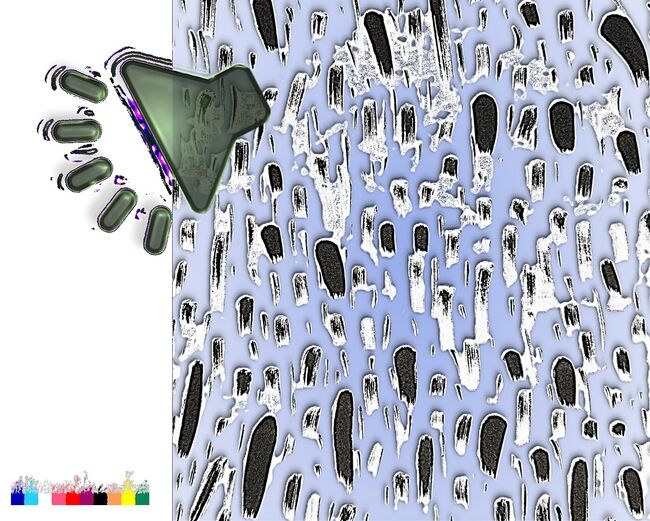 Figure 2. Kang Gyeongho, Untitled-20-2, ADFA Series, 2026. ADFA on Canvas, Dimensions Variable.
The medium descriptions 'ADFA on Canvas' and 'ADFA on Paper' officially denoted in this critique and visual artwork represent the independent media methodology and exclusive stylistic nomenclature established by the artist Kang Gyeongho. Formulated to challenge the semiotic ambiguity of conventional 'Digital Mixed Media' and to physically demonstrate the reversible loop between digital signals and matter, this terminology was defined, named, and publicly proclaimed for the first time in the global art community through this June 2026 publication.
Written & Illustrated by | Kang Gyeongho
Gyeongho Kang is an ADFA (Analog-Digital Fusion Art) artist and cultural critic who explores emerging artistic languages in the post-digital and AI era. By treating technology strictly as a subjective tool, his practice focuses on aesthetic inquiries that restore human experience and physical materiality to the core of creation. While decoding the oeuvres of contemporary artists through the lens of ADFA theory, Kang continues to examine discourses on analog-digital fusion in the age of artificial intelligence within the context of major art fairs and biennales—including KIAF and Frieze Seoul—as a central part of his ongoing critical practice.
#ADFA #Depaysement #ContemporaryArt #ArtInTheAgeOfAI #ADFAonCanvas


 강경호 기자
  http://newsbusan.com/news/view.php?idx=16755

 부산, 8년 만에 민주당 시장…전재수 7월 1일 취임
 선관위 용지 파행 파장, 여야 ‘국조’ 공감 속 특검 이견
 새 총리 후보에 한성숙 지명…20년 만의 여성 총리 도전
 AI 시대 예술과 ‘ADFA on Canvas’의 출현
- 관습적 혼합 매체를 넘어 기계 연산과 신체 궤적의 융합으로강경호 | ADFA 아티스트 | June 24, 202620세기 초, 벨기에의 초현실주의 화가 르네 마그리트(René Magritte, 1898~1967)가 도입한 '데페이즈망(Dépaysement)'은 시각 예술사의 중대한 인지적 교란이었다. 대상을 고유의 문맥에서 이탈...
AI 시대 예술과 ‘ADFA on Canvas’의 출현
AI 시대 예술과 ‘ADFA on Canvas’의 출현- 관습적 혼합 매체를 넘어 기계 연산과 신체 궤적의 융합으로강경호 | ADFA 아티스트 | June 24, 202620세기 초, 벨기에의 초현실주의 화가 르네 마그리트(René Magritte, 1898~1967)가 도입한 '데페이즈망(Dépaysement)'은 시각 예술사의 중대한 인지적 교란이었다. 대상을 고유의 문맥에서 이탈...
 AI 시대 예술 Art in the Era of AI
AI 시대 예술강경호 | ADFA 아티스트 | 2026년 6월 21일인공지능(AI) 시대에 예술의 정체성과 생성형 AI 저작권의 본질은 무엇이며, 동시대 미술계는 이에 어떻게 답해야 할까. 최근 문화예술계는 단 몇 줄의 텍스트 명령어만으로 인간을 압도하는 고화질 미디어를 생산해 내는 유례없는 기술적 도약에 직면해 있다. 빅데이터 연산을 통해 인간 .
AI 시대 예술 Art in the Era of AI
AI 시대 예술강경호 | ADFA 아티스트 | 2026년 6월 21일인공지능(AI) 시대에 예술의 정체성과 생성형 AI 저작권의 본질은 무엇이며, 동시대 미술계는 이에 어떻게 답해야 할까. 최근 문화예술계는 단 몇 줄의 텍스트 명령어만으로 인간을 압도하는 고화질 미디어를 생산해 내는 유례없는 기술적 도약에 직면해 있다. 빅데이터 연산을 통해 인간 .
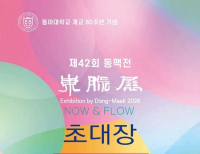 동아대 개교 80주년 기념 ′제42회 동맥전′ 30일 개막
[뉴스부산] 부산 미술의 든든한 버팀목이자 역사 깊은 동문 미술 단체 ′동맥회′가 동아대학교 개교 80주년을 기념하는 ‘2026 제42회 동맥전’을 개최한다.이번 전시는 석당미술관과 동맥회의 공동 기획으로 마련됐다. 오는 6월 30일부터 7월 5일까지 부산 서구 부민동 소재 석당미술관 제1, 2전시실에서 관람객들을 맞이한다. 전시의 서막을 .
동아대 개교 80주년 기념 ′제42회 동맥전′ 30일 개막
[뉴스부산] 부산 미술의 든든한 버팀목이자 역사 깊은 동문 미술 단체 ′동맥회′가 동아대학교 개교 80주년을 기념하는 ‘2026 제42회 동맥전’을 개최한다.이번 전시는 석당미술관과 동맥회의 공동 기획으로 마련됐다. 오는 6월 30일부터 7월 5일까지 부산 서구 부민동 소재 석당미술관 제1, 2전시실에서 관람객들을 맞이한다. 전시의 서막을 .
 [초대석] 김형철, 일생의 밭고랑
[초대석]일생의 밭고랑- 김형철(문파)엄마는 새벽 도시에 앉아 밭고랑 열매를 나누다가가녀린 뱃속으로살아 가야하는삶을 삼키고 있다이를 지켜보던아버지는 살아온일생의 자국걸음으로 의자에 걸터 앉아생노 걸음을 풀어내듯일생의 밭고랑 은혜로 딸의 우산을 위안해서담배 한모금의 연기벗에서 숨터를 삼고는태어나 걸어온갈래길로 부...
[초대석] 김형철, 일생의 밭고랑
[초대석]일생의 밭고랑- 김형철(문파)엄마는 새벽 도시에 앉아 밭고랑 열매를 나누다가가녀린 뱃속으로살아 가야하는삶을 삼키고 있다이를 지켜보던아버지는 살아온일생의 자국걸음으로 의자에 걸터 앉아생노 걸음을 풀어내듯일생의 밭고랑 은혜로 딸의 우산을 위안해서담배 한모금의 연기벗에서 숨터를 삼고는태어나 걸어온갈래길로 부...
 [초대석] 발레 피아니스트 최지원 ‘Warming-up’
[편집자 주] 국내 대표 무용 음악가 최지원 피아니스트의 음악 세계를 담은 ‘Music For Ballet Class Vol.8 by Jiwon Choi’의 첫 번째 수록곡, 〈Warming-up〉은 정형화된 클래식 선율의 틀을 깨고 피아노 고유의 유려한 선율 선을 따라 흐르는 4/4박자 즉흥 연주(Improvisation) 곡입니다.|음악 정보|...
[초대석] 발레 피아니스트 최지원 ‘Warming-up’
[초대석] 발레 피아니스트 최지원 ‘Warming-up’[편집자 주] 국내 대표 무용 음악가 최지원 피아니스트의 음악 세계를 담은 ‘Music For Ballet Class Vol.8 by Jiwon Choi’의 첫 번째 수록곡, 〈Warming-up〉은 정형화된 클래식 선율의 틀을 깨고 피아노 고유의 유려한 선율 선을 따라 흐르는 4/4박자 즉흥 연주(Improvisation) 곡입니다.|음악 정보|...
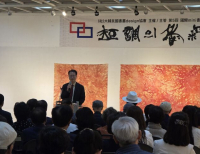 국제 미니 서화디자인전 15일 개막... '단조의 향기'
[뉴스부산] (사)대한민국서화디자인협회가 주관하는 ‘제15회 회원전 및 제5회 국제 미니 서화디자인 2026展’이 지난 15일 부산시청 제1·2·3전시실에서 개막했다. 오는 21일까지 이어지는 이번 전시는 ‘단조의 향기(短調의 香氣)’라는 주제 아래, 전통 서화의 고유한 필묵 정신을 현대적 시각 예술의 범주로 확장하...
국제 미니 서화디자인전 15일 개막... '단조의 향기'
[뉴스부산] (사)대한민국서화디자인협회가 주관하는 ‘제15회 회원전 및 제5회 국제 미니 서화디자인 2026展’이 지난 15일 부산시청 제1·2·3전시실에서 개막했다. 오는 21일까지 이어지는 이번 전시는 ‘단조의 향기(短調의 香氣)’라는 주제 아래, 전통 서화의 고유한 필묵 정신을 현대적 시각 예술의 범주로 확장하...
 [초대석] 사람 사이의 다정한 거리
초대석 = 사람 사이에는 너무 가까워도 힘든 거리가 있고, 너무 멀어져도 아픈 거리가 있습니다. 가까우면 말 한마디가 크게 들리고, 표정 하나가 오래 남습니다. 그래서 가끔은 조금 물러서야 합니다. 물러선다는 것은 떠난다는 뜻이 아닙니다. 서로를 덜 다치게 하기 위해 숨 쉴 자리를 남겨두는 일입니다. 하지만 너무 멀어지면 마음 사이..
[초대석] 사람 사이의 다정한 거리
초대석 = 사람 사이에는 너무 가까워도 힘든 거리가 있고, 너무 멀어져도 아픈 거리가 있습니다. 가까우면 말 한마디가 크게 들리고, 표정 하나가 오래 남습니다. 그래서 가끔은 조금 물러서야 합니다. 물러선다는 것은 떠난다는 뜻이 아닙니다. 서로를 덜 다치게 하기 위해 숨 쉴 자리를 남겨두는 일입니다. 하지만 너무 멀어지면 마음 사이..
 갤러리가이아 부산, 4인전 ‘Four Signatures’ 개최
[토크아트유] 서울 청담동에 기반을 둔 갤러리가이아가 부산 지사를 통해 지역 미술 시장에 본격적인 기획전을 선보인다.갤러리가이아 부산지사는 오는 6월 27일까지 강민수·김은기·이사라·이영섭 4인이 참여하는 기획전 ‘Four Signatures’를 개최한다. 이번 전시는 지난 1월 개관 기념 첫 전시로 선보인 유선태 작가의 개.
갤러리가이아 부산, 4인전 ‘Four Signatures’ 개최
[토크아트유] 서울 청담동에 기반을 둔 갤러리가이아가 부산 지사를 통해 지역 미술 시장에 본격적인 기획전을 선보인다.갤러리가이아 부산지사는 오는 6월 27일까지 강민수·김은기·이사라·이영섭 4인이 참여하는 기획전 ‘Four Signatures’를 개최한다. 이번 전시는 지난 1월 개관 기념 첫 전시로 선보인 유선태 작가의 개.


